By Amelie Rey-Giraud,
Group Climate Change Manager, and Javier Letamendi, Group Climate Change Manager
Scope 3 emissions can account for 70–90% of a company’s total Greenhouse Gas (GHG) footprint, and their reduction is critical to sustainable operation*. But delivering meaningful reductions from sources outside of your control is (predictably) challenging, making Scope 3 emissions the “elephant in the room” when it comes to net zero commitments.
In this article, we break down what Scope 3 and FLAG emissions are, why they matter to the long-term sustainability of the beverage industry, and how Finlays is helping customers and suppliers accelerate real, measurable reductions.
What are Scope 1, 2 & 3 and FLAG emissions?
Greenhouse Gas (GHG) emissions are categorised into Scope 1, Scope 2 and Scope 3, and FLAG.
- Scope 1 emissions are greenhouse gases that an organisation emits from sources it directly owns or controls, such as factories and vehicles.
- Scope 2 emissions are indirect emissions created from energy we purchase e.g. electricity and gas.
- Scope 3 emissions include all other indirect greenhouse gases across an entire organisation’s value chain, from employees commuting, third-party suppliers, transportation of goods, and waste.
- FLAG emissions (Forestry, Land and Agriculture) are greenhouse gases associated with the way we grow things and how the land is used. FLAG can also cover the carbon removals, that is carbon captured in forest, and land. FLAG emissions can be Scope 1 – for instance emissions from fertiliser used on fields an organisation owns; or Scope 3 emissions – emissions from deforestation on land owned by a third-party supplier, for example. They are also a major part of the natural beverage industry’s total carbon emissions.
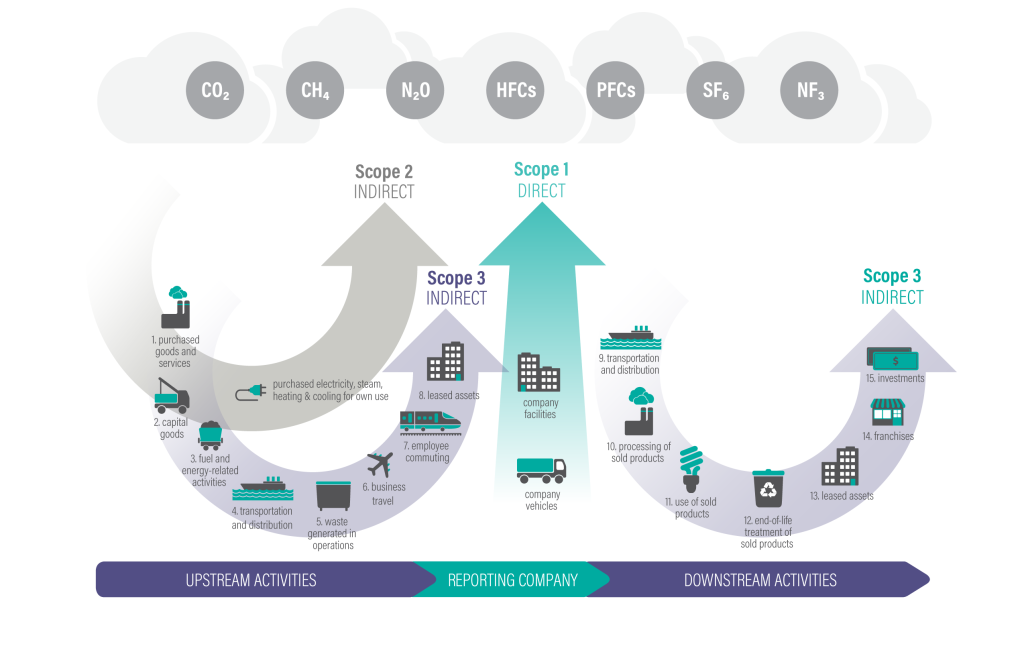
GHG Protocol’s Technical Guidance for Calculating Scope 3 Emissions, page 6
Why are Scope 3 and FLAG emissions the elephant in the room?
The simple reason Scope 3 and FLAG emissions are the “elephant in the room” is that they account for the vast majority of a company’s carbon footprint. For Finlays, Scope 3 and FLAG emissions account for 68% of our total carbon footprint** and it’s likely a similar figure for others in the beverage industry. So, on the path to net zero, reducing Scope 3 and FLAG emissions is critical, which is perhaps why such a high proportion of companies make Scope 3 disclosures (70% of S&P 500 companies do so***) as part of their ESG commitments.
But reducing Scope 3 and FLAG emissions isn’t easy. Value chains in the beverage industry are complex, data is hard to come by, and many players at farm-level in the industry are facing multiple competing priorities, not least cost pressures, data limitations and mitigating the more immediate impacts of climate change. Add to this the fact that Scope 3 emissions are – by definition – outside of an organization’s direct control, and you can see why reducing Scope 3 emissions is a major long-term challenge for the natural beverage industry.
How should the beverage industry approach Scope 3 and FLAG reduction?
What’s needed is a more collaborative, value‑chain‑wide approach – one that combines better primary data, aligned incentives, and practical support for suppliers and farmers. This means moving beyond reporting to investment: partnering with growers, co‑funding regenerative practices, sharing risk, and embedding sustainability into procurement decisions. Only by working across the value chain can beverage companies achieve credible, scalable reductions in Scope 3 and FLAG emissions.
What is Finlays doing to reduce Scope 3 and FLAG emissions?
To address these challenges, in 2026, Finlays is strengthening its commitment to Climate Net Zero (including Scope 3 and FLAG emissions) by 2040, with projects across two key areas where we can drive the greatest change: data, and supply chain collaboration.
Project 1: Improving the quality and accuracy of Finlays Scope 3 and FLAG emissions data
Finlays is partnering with Sustainit Solutions, a sustainability data consultancy, on a comprehensive ‘Data Assessment and Mapping’ project focused on the most complex and material areas of our carbon footprint: Scope 3 and FLAG emissions. The project will include stakeholder workshops, detailed mapping of current sustainability data, and a full review of data flows, quality, tools, and governance processes. It will also incorporate a horizon scan of emerging legislation and best practice, as well as a structured gap analysis and recommendations for improvement. The project directly compliments Finlays’ wider Data Transformation Initiative, helping us build the robust architecture and governance needed for trusted, repeatable, and scalable reporting.
Our partnership with Sustainit Solutions will allow us to strengthen our ability to understand emissions hotspots and identify opportunities to reduce emissions and improve water and waste management within our operations and supply base. Ultimately, helping pave the road to successfully achieving our ambitious Net Zero targets.
Project 2: Building deeper supplier collaboration through a Scope 3 and FLAG decarbonisation pilot
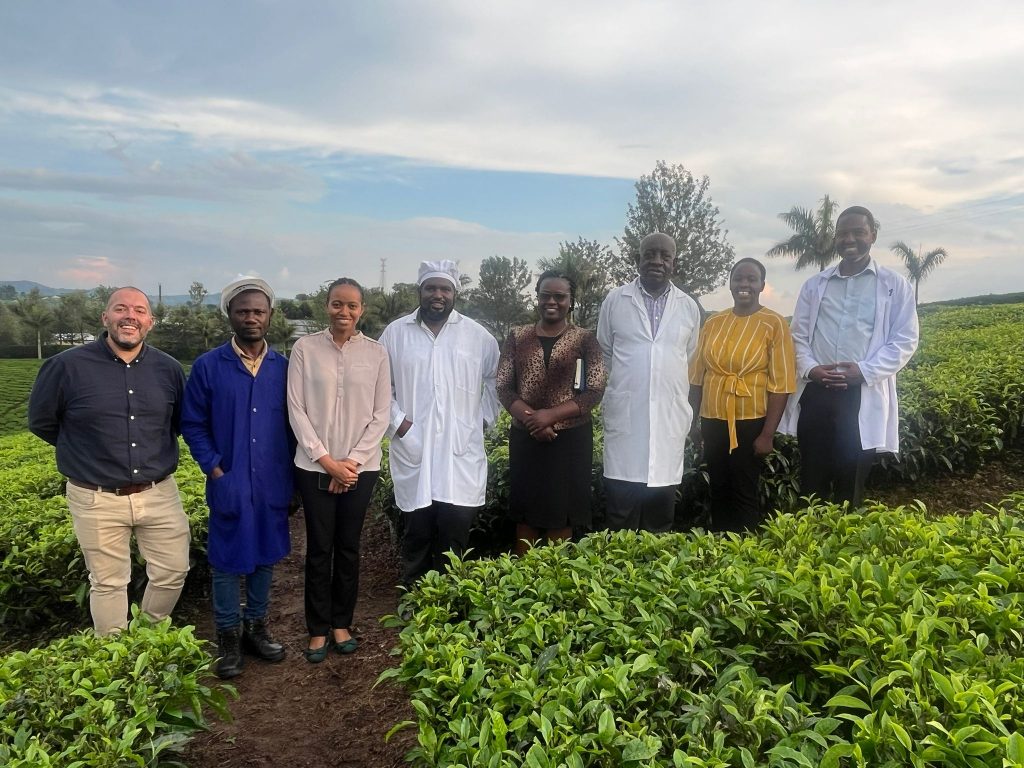
Raw materials from suppliers, such as green beans, represent a significant share of Finlays’ Scope 3 and FLAG emissions.
To address this, we are launching an ambitious project engaging 11 of our most important tea and coffee suppliers on Scope 3 and FLAG decarbonisation. This follows the same approach we use in our existing supplier programmes and will help us gather consistent supplier data, find practical ways to reduce emissions, and create a model we can scale up as we act for the long-term.
The supplier engagement pilot will have three phases:
- Engagement with suppliers to gather information and assess progress on climate and carbon emissions;
- Planning to identify early emissions reduction initiatives and co-design an action plan; and
- Implementation to deliver the action plan and track progress.
Alongside supplier engagement, the pilot will also increase collaboration with Finlays’ procurement and sourcing teams, who will receive climate and sustainability focused training codesigned with our partner and sustainability consultancy, Action Sustainability. These sessions will deepen internal capability and help embed sustainability into supplier conversations.
With this pilot, we are aiming to identify gaps and needs and provide key insights for scalable actions across our supply chain. By the end of the year, we will be able to review progress, discuss key learnings and replicability, and start developing a larger second version, and possibly integrate it into our supplier relationship management programme.
What’s next?
Together, these two projects will strengthen the data, systems, and relationships needed to drive Finlays Climate Net Zero agenda. Critically, it will help our customers and suppliers to meet their own Scope 3 commitments.
If you’d like to find out more about our approach to achieving Climate Net Zero, click here.
**https://www.finlays.net/news/understanding-finlays-approach-to-flag-emissions-an-faq/#_ftn1
*** https://www.ioes.ucla.edu/project/the-state-of-corporate-sustainability-disclosure-2025/